
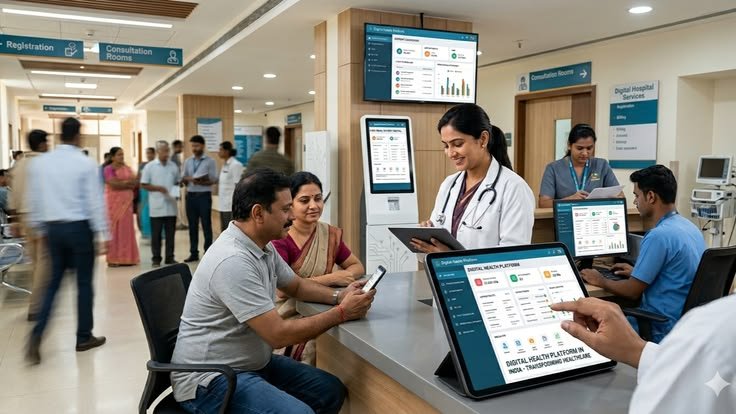
Why Data Matters in Modern Healthcare
Healthcare organizations today have access to more information than ever before. Patient enquiries, appointments, website visits, Google searches, reviews, treatment patterns and marketing campaigns can all generate valuable data.
But having data is not the same as using it effectively.
For hospitals, clinics and healthcare practices, the real advantage comes from turning available information into meaningful insights and using those insights to make better business and operational decisions.
A data-driven healthcare growth approach helps organizations understand what is working, where opportunities are being missed and which areas deserve attention first.
What Is Data-Driven Healthcare Growth?
Data-driven growth means using relevant information and measurable outcomes to guide healthcare business decisions instead of relying only on assumptions, opinions or intuition.
For example, instead of simply asking:
“Are we getting enough patients?”
a healthcare organization can examine:
- Where new enquiries are coming from
- Which services generate the most enquiries
- How many enquiries become appointments
- Which marketing channels generate qualified patients
- How quickly enquiries are being responded to
- Which pages receive the most website traffic
- How patients discover the organization
- Which campaigns generate meaningful results
This creates a much clearer picture of the patient acquisition and growth journey.
Why Healthcare Organizations Need Better Data Visibility
Many hospitals and clinics already have data, but that data may exist in different places.
Marketing data may be available through advertising platforms.
Website information may be available through analytics tools.
Patient enquiries may be recorded by reception teams.
Appointments may exist in hospital software.
Reviews may sit on Google.
When these sources are looked at separately, it becomes difficult to understand the complete picture.
The goal should not be to collect unlimited data.
The goal should be to identify the right data that supports better decisions.
1. Measure Where Patients Are Coming From
One of the most important questions for any healthcare organization is:
Where are our patients coming from?
A patient may discover a hospital through Google Search, Google Business Profile, social media, a referral, an advertisement or a direct website visit.
Understanding these sources can help organizations identify which channels deserve more attention.
For example, if Google generates a significant number of qualified enquiries while another channel generates large amounts of traffic but very few appointments, the organization has an important insight.
This does not automatically mean one channel should be stopped.
It means performance should be evaluated based on meaningful outcomes rather than surface-level activity.

2. Track the Patient Acquisition Funnel
Patient acquisition should be viewed as a journey rather than a single event.
A simple healthcare growth funnel can look like:
Visibility → Enquiry → Qualified Lead → Appointment → Patient → Revenue
Tracking this journey can help identify where potential patients are being lost.
For example:
If website traffic is increasing but enquiries are not, the website or call-to-action may need attention.
If enquiries are increasing but appointments are not, communication, follow-up or lead qualification may need improvement.
If appointments are increasing but revenue is not improving, other operational or service-related factors may need to be examined.
Data helps identify the point where the problem may actually exist.

3. Use Website Data to Understand Patient Behaviour
A healthcare website can provide valuable information about what potential patients are interested in.
Useful website metrics can include:
- Most visited pages
- Traffic sources
- Search queries
- New versus returning visitors
- Engagement patterns
- Enquiry form submissions
- Click-to-call activity
- Appointment-related actions
For example, if a particular treatment page consistently receives significant traffic but very few enquiries, that page may need better information, clearer calls to action or stronger trust elements.
This is much more useful than simply knowing the total number of website visitors.
4. Use Marketing Data to Improve Decisions
Healthcare organizations often invest in social media, Google advertising, content marketing or other promotional activities.
But activity does not always equal growth.
A data-driven approach looks beyond:
Impressions → Likes → Reach
and asks:
What happened after the patient saw the campaign?
Important measures may include:
- Enquiries generated
- Cost per enquiry
- Qualified enquiries
- Appointments generated
- Treatment conversions
- Revenue contribution
This allows healthcare leaders to evaluate marketing based on business outcomes rather than only engagement numbers.
5. Monitor Google Business Profile Performance
For local hospitals and clinics, Google Business Profile can play an important role in patient discovery.
Organizations can monitor areas such as:
- Searches
- Website visits
- Calls
- Direction requests
- Reviews
- Search visibility
These signals can help reveal how potential patients are discovering the organization locally.
A strong Google presence should therefore be viewed as part of the overall patient acquisition system rather than as a separate marketing activity.
6. Understand Conversion, Not Just Enquiries
Getting more enquiries is not always the same as getting more patients.
Suppose two healthcare organizations generate 500 enquiries.
Organization A converts 5% of enquiries into appointments.
Organization B converts 15%.
The second organization may generate significantly more appointments without increasing its enquiry volume.
This is why conversion data is important.
Healthcare organizations should understand:
How many enquiries are becoming appointments?
and:
How many appointments are becoming patients?
These numbers can reveal growth opportunities that may otherwise remain hidden.
7. Use Data to Improve Patient Experience
Data is not only useful for marketing and revenue.
It can also help identify opportunities to improve patient experience.
For example, an organization may discover:
- Long waiting periods
- Repeated patient complaints
- Delayed responses
- High cancellation rates
- Appointment scheduling problems
- Frequently asked questions
These patterns can help management identify areas that need operational improvement.
Better patient experience can strengthen trust, reputation and long-term patient relationships.
8. Create a Simple Healthcare Growth Dashboard
A healthcare organization does not need dozens of complicated reports.
A simple dashboard can be more useful if it focuses on the metrics that matter.
A practical healthcare growth dashboard could include:
| Area | Example Metrics |
|---|---|
| Visibility | Google searches, website traffic |
| Enquiries | Calls, forms, WhatsApp enquiries |
| Conversion | Enquiry-to-appointment rate |
| Patients | New patient appointments |
| Reputation | Reviews and rating trends |
| Marketing | Cost per enquiry, campaign performance |
| Revenue | Revenue by service or channel |
The exact metrics should depend on the organization’s business objectives.
The purpose of a dashboard is not to create more reporting.
It is to make important information easier to understand and act upon.

9. Turn Data Into Action
Data becomes valuable only when it leads to better decisions.
A useful process is:
Measure → Analyze → Identify → Prioritize → Act → Review
For example:
If data shows that a large number of patients are visiting a treatment page but very few are contacting the hospital, management can investigate the page and patient journey.
If data shows that enquiries are being generated but follow-ups are delayed, improving the enquiry handling process may have a greater impact than increasing advertising spend.
This is where data-driven growth becomes practical.
Data Should Support Human Decisions
Healthcare is not only about numbers.
Patient trust, doctor expertise, clinical quality, communication and experience cannot be reduced to a single metric.
Data should therefore support management decisions, not replace professional judgment.
The strongest healthcare organizations combine:
Data + Experience + Patient Understanding + Strategic Decision-Making
This creates a more balanced approach to growth.
Final Thoughts
Modern healthcare organizations have access to significant amounts of information.
The challenge is not simply collecting more data.
The real challenge is identifying the information that matters, understanding what it is telling you and turning those insights into practical actions.
A data-driven healthcare growth strategy can help hospitals and clinics understand their patient acquisition journey, identify gaps, improve marketing decisions and create more sustainable growth.
At MedUp Links, we believe healthcare growth should be measured beyond likes, impressions and website traffic. The focus should be on understanding the complete journey from visibility to enquiry, appointment, patient and sustainable business growth.
If your hospital or clinic wants to understand where its current growth opportunities are and which areas should be prioritized, a structured healthcare growth consultation can be a useful starting point.